


.jpg)
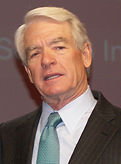

Founder, Chairman, and CEO - Charles Schwab
By Jack Ghannam
Many of us are familiar with the name Charles Schwab. Schwab is synonymous with investing, financial services, and the retail investment space. However, few know the story of Charles Schwab, his courage and risk-taking within the field, and the hard work he dedicated to building his company. Starting in 1963, Schwab opened an investment newsletter, called the Investment Indicator. The Investment Indicator sold issues recommending different investing strategies, suggesting different equities to focus on in the coming months, and allowed for an effective and efficient information flow to its followers. The newsletter did well, running for around 8 years in its initial state with 3,000 subscribers, each paying $84 a year. After nearly 8 years of consistent and forecastable revenue, Schwab decided to incorporate in California as the First Commander Corporation; incorporating with the help of four friends.
Unlike other firms, Schwab took this and cut its rates in half, restructuring the sales force to make sales more affordable, all while establishing call centers to make sales over the phone. These three changes altered the trajectory and utterly revolutionized the retail investment space. Accessibility to investment, affordable and ethical sales structures, and cheaper fees shook the industry to its core – forcing companies to take more care of their clients and compete against each other. By 1986, Schwab had expanded to 1.6 million customers, bringing in $308 million, growing at an incredibly fast pace. Still today, Charles Schwab continues to pursue accessibility to investment opportunities, and implores financial literacy for all ages, giving hope to many who work to acquire the American Dream.

By 1972, Schwab had established control of the company, purchasing all of the outstanding shares that he had not owned from his four partners. At this point, Schwab, as the sole commander of First Commander, changed the name of the incorporated firm to Charles Schwab & Co. Inc. By 1975 Schwab found himself amid deregulation within the financial services industry. The SEC had just deregulated securities via the Securities Act Amendments of 1975 – allowing companies to charge any fee they’d like.
Business Takeaways:
-
If Nothing Else, Provide Value: Schwab understands the importance of value. His first business endeavors saw value as the priority to customers. In cutting current fees in half, Schwab, knowing that 80% of traders can’t beat the market, allowed customers to get the same experience with him for half the price. This concept increases client's conviction, compounding on his recognition, trade accessibility, and historical returns. Value is key, and if nothing else, customers and clients alike need to understand how much of their money is going to be spent, and more importantly, how much of that will be coming back.
-
Accessibility is Key: Schwab had important price-lowering strategies within his rates for investing advice and recommendations. He made trades much more accessible in terms of financial contributions, he also made investing more accessible by allowing sales via phone calls. Calls with clients would often take place, serving as more efficient, and much quicker when reacting to market volatility. This gave him a structurally sound competitive advantage against his competitors when first starting out.
-
Upset the Space: Schwab literally upset the space. With so many innovations that established firms did not yet have, firms started to block their expansion. When your competitors resort to trying to take you down, you know you’re doing something right. When Schwab realized their arguments were invalid, his expansion continued swiftly. Innovation that upsets the space is innovation that revolutionizes it.
College Student Takeaways:
-
Don’t Let Your Environment Define You: Though Schwab wasn’t welcomed to join the industry by his competitors in a cordial way, he continued to push onward. His efforts to continually innovate and impress the retail investment space led him to redefine the space around his activities. Shortly after innovating, his competitors would replicate his strategies within their businesses. Schwab didn’t let the space define him, he made sure that everyone knew he was the space that was going to redefine them.
-
Manifest Your Goals: Your goals are one of the few things that people hold onto for years on end, which is why they are most important to put first and at the front of your mind when making decisions. In this case, Schwab was determined to make decisions that furthered his goals, putting action toward his dreams. The only way you’ll win is if you try!
"If You Can Dream It, You Can Do It."
How Walt Disney Revolutionized Film
By Mariano Pinto
Being a great entrepreneur does not just require having a vision to either expand an industry or a market or come up with a new product or service. What differentiated Walt Disney from other entrepreneurs was his leadership and determination to make his dreams come true.
Walt Disney’s famous quote was “it all started with a mouse;” however, it truly started in 1919 when Walt moved to Kansas City. There, he wanted to make cartoons for local newspapers. First, Walt worked at Pesmen-Rubin Art Studio, then went on to work for the Kansas City Film Ad Company, and then finally, Walt Disney along with one of his employees from the Kansas City Film Ad Company, Fred Harman, founded Laugh-O-Grams. Before Laugh-O-Grams went bankrupt in 1923, one of its biggest hits was Alice in Cartoonland.
After the failure of Laugh-O-Grams, Walt, his brother Roy, and another cartoon artist, Ub Iwerks, set course for Hollywood, where they would be the founders of Disney Brothers' Cartoon Studio, which soon experienced a name-change to Walt Disney Studios, as suggested by Roy. Walt’s first cartoon character that hit it big was Oswald the Lucky Rabbit, first appearing in 1927. If Oswald was Walt’s first animated, lovable, personified cartoon animal, then did it truly “all [start] with a mouse?” Oswald had been “stolen” from Walt and his studios in 1928, due to carelessly having the character he created copyrighted under his distributor’s name: Margaret Winkler. After this, Walt became very cautious and possessive of his creations to make sure this wouldn’t happen again.
Walt Disney Studios was continuing their long stream of successes – including Snow White and the Seven Dwarfs, Fantasia, and Cinderella – Walt Disney invested $17 million to make the Disneyland theme park, which opened on July 17, 1955. He was inspired to make this theme park after visiting Griffith Park in Los Angeles with his daughters Diane and Sharon, envisioning a theme park that people of all ages can enjoy in an immersive environment. Disneyland, being the great success it was in the 1950s, Walt wanted to head east and make another one of his other visions – the Experimental Prototype Community of Tomorrow (EPCOT) – a reality. Sadly, Walt passed away in 1966, but Roy carried out his dream by building a whole resort in Orlando, Florida, naming it Walt Disney World and opening in 1971. The Walt Disney Company expanded its horizons in the theme park industry by opening parks in Paris, Hong Kong, Tokyo, and Shanghai.

Losing Oswald was a major detriment to Walt Disney, financially and emotionally. Later in 1928, Mickey Mouse starred in Walt’s first successful film Steamboat Willie. Although Walt did not actually draw Mickey as he was drawn by Ub Iwerks, Walt voiced him. Prior to Steamboat Willie, Mickey was featured in Plane Crazy and The Gallupin’ Gaucho; however, they were not very successful as they were silent films, and the sound was starting to be integrated into the film. Other films that were hits for the Walt Disney Studios include Silly Symphonies (1929), Flowers and Trees (1932) which was Disney’s first film in color to win an Oscar, and The Three Little Pigs (1933).

Takeaways:
-
NEVER GIVE UP: Even though Walt Disney’s first company went bankrupt and he lost his creation Oswald the Lucky Rabbit, he never gave up and continued to follow and pursue his dreams. Walt defined perseverance through the journey of his life and career.
-
STAY UPDATED: Walt did not have much success with Plane Crazy and The Gallupin’ Gaucho because they were not up-to-date with technology, as they were silent films. This highlights the importance of keeping up with the demands of the market and staying appealing to the target audience.


How a Passion for Beauty Led to a Multi-Million Dollar Empire
By Farrell Carran
From at-home hair care to co-founding a multimillion-dollar business, Ali Webb explains exactly how she grew her passion into a business while focusing on six key areas.


Solve One Piece of the Puzzle
DryBar doesn’t offer haircuts and colors like traditional salons but focuses on the blowout. The piece of the puzzle that leaves women feeling confident when walking out of their appointment. With her brother's help, Ali could afford the project. Entrepreneurs must find individuals to help invest in their startups.
Focusing on Affordable Luxury
Wanting women across the nation to have access to the service, Ali Webb wanted to ensure that the blow drys were affordable and accessible to all. She wanted to create an environment where women could feel welcome have a break from their chaotic lives and walk out feeling more confident. Entrepreneurs should find their target market and ensure that their products are available to those individuals.
Franchising for Future Flourishing
Facing immense popularity, the company began to grow rapidly. Blowout salons began to span across the county. Ali Webb was initially against franchising as she wanted to ensure that Drybar’s founding values were found in all of her stores. However, with other blowout bars making their way into the industry, Ali agreed to the franchise as she wanted their services and values to be accessible to everyone. Entrepreneurs should look at all possible outcomes of making such a big decision as franchising and determine what the best outcome would be for their company.
Invest in Your Product
After working in the hair industry since her early twenties, Ali curated her favorite hair care products and used them at her salon. However, she realized that some of the products may not complement a blowout as well as they should. She took it upon herself to create lightweight hair care products that would create the best long-lasting blowout look that women across the country could use. Even those who didn’t have a dryer near them could get the perfect blowout with her products. Her products became extremely popular and were sold in major retailers like Sephora. By specializing in hair, Ali was able to gain the trust of her customers and sell millions of products.
Face the Truth, No Matter How Messy
What makes Ali different from other Entrepreneurs is her ability to be open and authentic with her customers. Ali wrote a book called The Messy Truth where she talked about the struggles she and her family faced while pursuing her dreams. This book resonated with a lot of her customers as it shares many experiences that women all across the world face.
No Need to Re-Invent the Wheel
Ali Webb emphasizes the importance of taking something that you are passionate about and making it a reality. She emphasizes that anyone can be an entrepreneur if they can take something that isn’t done well and make it better. Ali Web’s openness and commitment to her customers allowed her to create a nationwide business. Her belief in specializing in one expertise has allowed her to thrive in the marketplace.


The Best Advice for Entrepreneurs Just Starting Out - The GaryVee Experience
By Kyle Spear

“GET AS CLOSE TO THE SUN AS POSSIBLE” - Never believe you are overqualified for a position. Gain experience, listen, and learn. Creating a network and building genuine relationships as a result of hard work is the easiest way to gain valuable experience within the professional world. Just sticking your foot in the door, no matter how small the opportunity, can change your life in unseen ways.
“THE LITTLE THINGS” - Entrepreneurship is a learning experience, and it starts with the little things in life. Look to grow and constantly expand upon your experiences in the culture of the working world, and always remember that this is a people’s profession. Once you master how to understand people and treat them with kindness, especially in a situation of leadership, the positivity you display will be reflected in the outcomes of your endeavors.
“SELF RELIANCE” - As an entrepreneur, you are the one who drives success and takes the big risks. Developing self reliance is maybe the most crucial step within the whole process as it is how you invest, shape, and define yourself and your business. Everyone should understand that investing in yourself and your knowledge is completely free, and knowledge creates value. You are your best thing.
“THE 7 RULES OF SELF RELIANCE” -
1 - Stay low, keep moving
2 - Be a value creator
3 - Don't be a waiter, Be a creator
4 - Unlearn, re-learn, and invest in yourself
5 - Treat your reputation as a currency
6 - Be a long-term player
7 - Live with no regrets
Important Takeaways -
Both Gary and Masha give an excellent perspective on what it means to be an entrepreneur. Most people believe that business is strictly about the results, but in reality, it is much deeper than that. Yeah, it's great to see success and reap the rewards of hard work, but there are some things that are heavier than just monetary gain. I think that Gary and Masha touch on this perfectly at the end of the episode, in which Masha details her walk within the business and the relationships that have defined it. At the end of the day, it's so important that we work toward betting ourselves and the relationships that define our life so that we can leave lasting and meaningful impacts, both in and out of the business world.
How can we begin and succeed as Entrepreneurs in the constantly evolving world?
Gary Vaynerchuck sits down with Masha Aboul, CEO of Digital & Savvy and author of “7 Rules of Self-Reliance”, to discuss the fundamentals in the field of Entrepreneurship. Learn more about what it takes to put your foot in the door and succeed from two of the best in the business.

Student Entrepreneur of the Month: Brandon Spencer
Revolutionizing the Fashion Industry - One Campus at a Time
The modern society is often one which involves a lot of waste. Whether we are wasting food, wasting our environment through carbon emission, or wasting our raw materials through clothing production, we face a lot of unused potential. The dance between low-cost and high-quality goods has become less of a balance and more of a competition between companies seeing who can stretch the bottom line the furthest. The major issue with this system is that after a certain point, the marginal cost to society starts to outweigh the marginal benefit, leading many producers to create negative externalities, particularly within the clothing and fashion industries. More than ever before, it is paramount that brands and companies innovate to create a more sustainable fashion and beauty industry that coincides with both a growth in profits, as well as supporting the environment in a world of growing climate concerns.
Brandon Spencer, Gabelli School of Business, Class of 2023 faced this exact issue when attempting to navigate the fashion industry. When looking at the landscape of the fashion industry, there were little to no brands that actively supported positive community engagement, low prices, and positive environmental outcomes. Brandon, a student-athlete at Fordham, saw this exact issue come to life while in college and beyond. Brandon realized the impact that brands and companies can have in the space, and how culture is often decided by the activity of the users. This inspired Brandon to develop E-Closet, an online clothing and accessory marketplace, that targets university-based communities and supports sustainable fashion choices in a circular economy.
E-Closet revolutionizes the concept of “sharing clothes with a friend,” and allows college students to buy, sell, and rent clothing with each other. E-Closet is designed for use by college students and breaks down the availability of clothing based on collegiate affiliation. This means that sophomores at Fordham can find a clothing design from a senior on campus, and rent or sell that item almost instantly.
E-Closet takes this mission of community engagement very seriously and promotes several safety features to ensure this mission is fulfilled. When users are prompted to create an account, E-Closet verifies their login with the university, ensuring that they are current students. E-Closet also prescribes specific “meeting locations” within the app, so users have a safe and familiar place to travel to if they want to exchange or purchase products from each other. For example, at Fordham, users can designate a meet-up at the McShane Center or at Rams Deli to conduct a sale; places that most Fordham students are familiar with. Furthermore, users cannot successfully create an E-Closet account without first verifying their email; leveraging Google and Fordham’s stringent security features to ensure safe and sanctioned use of the platform.
Fordham is one of the first academic institutions on the E-Closet app, currently hosting a total of over 100 colleges and universities with a presence on the app. In total, Brandon has plans to expand E-Closet nationally, helping college students across the country find clothing and accessories for every occasion imaginable in a fun and low-cost way. If you’re a college student and looking to expand your wardrobe without breaking the bank, that dream is possible with E-Closet. Check out E-Closet below!
Check out E-Closet Below:
Apple App Store: E Closet
Website: https://eclosetapp.com/
Linked-In: https://www.linkedin.com/company/e-closetapp/
Instagram: https://www.instagram.com/ecloset.app/


Industry Dashboard
By Mariano Pinto
-
Generative AI startups get 40% of all VC investment in cloud amid ChatGPT buzz:
-
Venture funding for cloud startups in the U.S., Europe, and Israel this year is projected to rise 27% year-over-year, increasing for the first time in three years, according to a report from VC firm Accel
-
Out of the $79.2 billion total raised by cloud firms, Accel said 40% of all funding went to generative AI startups.
-
“AI is sucking the air out of the room” when it comes to cloud, Philippe Botteri, partner at Accel, told CNBC in an interview this week.
-
-
OpenAI gets $4 billion revolving credit line, giving it more than $10 billion in liquidity:
-
Amazon cashier-less tech competitor Grabango shutters after failing to secure funding:
-
Grabango, one of Amazon’s top competitors in cashierless checkout technology, is discontinuing operations.
-
Grabango stated that discontinuation is a tough decision after failure to secure financing.
-
Grabango had secured deals with Aldi, Giant Eagle, 7-Eleven, and Circle K.
-


References:
Alzain, Dr. Hashim. “Walt Disney: The Entrepreneur.” Medium, Medium, 17 Jan. 2023,
“Walt Disney - Frozen, Quotes & Pictures.” Walt Disney Biography,
https://www.biography.com/business-leaders/walt-disney. Accessed 23 Oct. 2024.
Browne, Ryan. “Generative AI Startups Get 40% of All VC Investment in Cloud amid Chat GPT Buzz.”