


.png)
Cover Artwork: Besa Mixha
How John Mackey Redefined the Way People Eat
By Farrell Carren


Beginning as a small local business in Austin, Texas, Whole Foods is now a leading organic foods market with hundreds of stores across the United States and the United Kingdom. With a mission to nourish people and the planet, founder John Mackey sources nutritious options to support the health of individuals within a community. Mackey believes there is a higher purpose than simply making a profit. He coined the term conscious capitalism, which contains the premise that “…business is good because it creates value, it is ethical because it is based on voluntary exchange, it is noble because it can elevate our existence, and it is heroic because it lifts people out of poverty and creates prosperity” (Mackey 13).
After learning about the impacts of food, Mackey, along with many other Americans, became conscious about the types of foods they were consuming. Mackey found a gap in the market by identifying that very few organic food stores existed, and if they did, they wouldn’t offer many products. This fueled Mackey’s passion and later the pursuit of Whole Foods.
While learning how to build a business and become a capitalist, Mackey also had to solidify his company’s values and ethical codes. One key factor was the environment. Because the agricultural industry uses extensive agricultural resources, Mackey wanted to do it sustainably. The founder realized that customers wanted to support businesses that were looking out for the planet, and he wanted to build a customer base that could trust Whole Foods’ agricultural practices. Also, he tried to look out for consumers, as many pesticides are sprayed on crops to have higher crop yields, which can correlate to adverse health effects.
Whole Foods faced backlash due to constant price increases. The price of sourcing organic foods continued to increase, causing Whole foods to raise their rates frequently. Whole Foods wanted to keep its core values and ensure everyone could access organic foods. This led Mackey to increase promotions and sales of items and keep prices constant to lower the effect of inflation on customers. Through passion and conscious capitalism, Mackey created a business that services millions of customers annually.
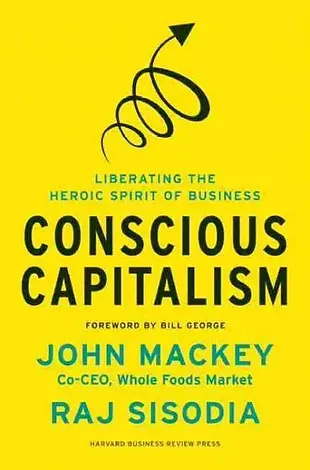
FIND A GAP IN THE MARKET: Mackey was able to create a successful business because he found something that not everyone was doing. By noticing that many supermarkets were missing organic food items or that they were simply hard to distinguish from regular groceries, he wanted to produce a store where all the items contain simple, healthy ingredients.
PRACTICE SUSTAINIBILITY: To gain trust and customer return, business owners must have sustainable practices. Whether this is implemented through environmental pursuits or in other ways, customers want to rely on companies that are looking out for stakeholders and not merely looking for profit.
ACCESSIBILITY IS NECESSARY: To reach a plethora of markets, products need to be accessible to as many people as possible. Although John Mackey faced backlash for increased prices of items, the company was able to find ways to keep the prices of many products down and promote sales.
Key Takeaways:


A Master of Continuous Creativity: Jensen Huang
By Mariano Pinto Jr.


Most successful companies are founded with the purpose of solving a common problem that they have identified within society. Jensen Huang, partnering with Curtis Priem and Chris Malachowsky, saw flaws in computers in the early 1990’s. With the era of modern technology in its prime, computing hardware was at the top of the trio's minds. Specifically, Huang, Priem, and Malachowsky aimed to transform the gaming and multimedia markets by introducing 3D graphics. By revolutionizing the graphics standard in contemporary games, Huang had a vision of improving user experience, and more importantly, aimed to create the next generation of video games. In their research, Huang and his partners found that computer games solely functioned off of a computer’s central processing unit (CPU), which ultimately limited its performance and thus the player experience. In 1999, NVIDIA came up with their invention of the GeForce 256, a graphics processing unit (GPU) that was groundbreaking in many fields.
The GPU – also with the later introduction of CUDA in 2006 – accelerated the rendering of 3D graphics, making the experience of users more lifelike and immersive. It allowed for texture mapping, lighting, and shading to a much more sophisticated extent. The GPU also allowed for parallel processing, improving computer performance in video rendering and scientific simulations. This allows for managing mass amounts of data simultaneously while maintaining high performance. The GPU also allowed for the growth of artificial intelligence and machine learning, as it expedited neural network training. Other fields that the GPU had a tremendous impact on were artificial reality and virtual reality, autonomous vehicles, and cloud computing.
Even with all the improvements that the first GPU with CUDA has brought to the table, Huang did not stop at the start of his innovations. In 2018, NVIDIA introduced the RTX: the first GPU capable of real-time ray tracing, an improvement which improved the overall graphics' realism. The RTX has evolved technology to be more realistic by enabling accurate modeling of the behavior of real-world objects, making experiences truly lifelike and enjoyable. Previous to this, there was the NVIDIA Quadro P6000 GPU. The Quadro P6000 GPU was used by Walt Disney Imagineering for their recent project on the development of their parks’ expansion with Star Wars: Galaxy’s Edge, using it in their Millennium Falcon: Smugglers Run attraction. In this attraction, you are put in a simulation where you are piloting Han Solo’s Millennium Falcon, gunning down TIE Fighters, and repairing the ship all in real-time with other riders. This real-time rendering has revolutionized the entertainment industry, as Universal theme parks also have implemented this technology in multiple of their simulation attractions.
Currently, one of their latest innovations, the NVIDIA NIM, has played a crucial role in the development of humanoid robots. NVIDIA started projects and simulations for robots to simulate human motion in real-time, simultaneously with the user. Jenson Huang has never stopped innovating and demonstrated his continuous creativity, as they are continuing to produce new products and come up with brand new ideas.


Breaking Through the Industry:
Y'all Sweet Tea Co.
By Jack Ghannam
The food and beverage industry is notoriously an immensely competitive and challenging space to enter for new brands with and market share away from companies that have been around for over a hundred years is a feat that may new challengers for market share are unprepared for. Though it can be almost impossible to penetrate this corporate veil of monopolies, Darien Craig and Brandon Echols were not deterred.
Craig and Echols grew up in Hayden, Alabama, and first met when they were the age of 6 years old. Craig and Echols joined the same high school and eventually went to the same college. Funnily enough, Craig and Echols both dropped out of college at the same time as well. Craig was lost, and after quitting his full-time job, he had even more instability in his life that he needed to find an answer to. With only $307 to his name, Craig started his first home-grown batch of sweet tea, purchasing mason jars, sugar, and tea leaves to start making his own tea.
With the first batch being a huge success, Craig decided to look into a possible business opportunity with his sweet tea. This early sign of success inspired Craig to inform Echols about his successes and his new business venture. Craig and Echols started to scale the business, increasing their batch size and their customer base. The two eventually named their business Y’all Sweet Tea, a nod to their southern roots. With a product, brand, and local channels established, Craig and Echols had the goal of increasing distribution and brand awareness to eventually scale the company. This saw the two focus more on supermarkets as well as maintainin their direct to consumer sales.
The two launched their website to improve direct to consumer sales as well as their dsitruvtion in grocery stores. After setting out to increase grocery distribution, the two managed to sell product to over 600 grocery store locations across the south. With this visibility, Y’all Sweet Tea raked in over $4 million in revenue and over $800k in profit. Furthermore, through their brand-creation tactics, their direct to consumer channels also saw a huge increase across all platforms. In the re-stock of their original flavor, Georgia Peach the two sold over 10,000 units in just under 35 minutes, bringing in $100,000 in sales in half an hour.
Brand growth and development like this is something that comes with the creation of a passionate and focused consumer base. By mixing Craig and Echols’ ability to convince and connect with their audience as well as their soft skills in communication and discipline in tracking down so many distribution channels, they were able to grow past expectations. Finally, the two managed to take market share away from their established and mature competitors, a feat in itself. Since growing their brand, Y’all Sweet Tea continues to grow year over year and make waves in the food and beverage industry in the southern United States.
Check out Y'all Sweet Tea Below:


The Network State and How to Start a New Country - The Tim Ferriss Show

.jpg)
.jpeg)
By Kyle Spear
The future of entrepreneurship is in our hands, but what exactly might that look like?
In Episode #606 of The Tim Ferriss Show, Tim Ferriss interviews Balaji S. Srinivasan, an angel investor and entrepreneur. The discussion takes a look at Balaji's concept of "The Network State," highlighting the future of entrepreneurship and its constant evolution.
The Network State:
-
A “Network State" is a decentralized, internet-based nation with shared values, capacity for collective action, a digital capital, and physical locations spread globally.
-
These networks are reshaping our ideas of governance and community. Shaped by technology and moral innovation, they enable global communities to organize and traverse beyond our geographical boundaries.
What Might This Entail? -These Network States can hold immense power and influence as they bypass traditional government and corporate structures by leveraging blockchain and cryptocurrencies. Entrepreneurs can use these tools to create and grow in various areas in business and beyond. Finance, healthcare, and even politics are being reshaped within these networks, paving the way for expansion backed up by the immense growth in the cryptocurrency movement.
Cryptocurrency Integration - Balaji highlights Bitcoin as the main foundational technology within the networks and business structures, but emphasizes the need for cryptocurrencies beyond Bitcoin to power network states. Cryptocurrencies integrate into governance structures, enabling quick and easy transactions, digital property rights, and funding for virtual or physical infrastructure.
Missionary vs. Mercenary Mindsets - Successful societal and entrepreneurial innovations come from missionary (value-driven) approaches rather than mercenary (profit-driven) ones. A network state thrives on shared purpose and moral innovation, making missionary leadership essential for its long-term sustainability. Entrepreneurs are encouraged to build with a focus on solving meaningful problems rather than purely chasing financial returns.
My Takeaways - I think this episode offers a great visionary perspective on the future of governance, and entrepreneurship as a whole. Balaji’s emphasis on the potential of decentralized technologies and moral-driven entrepreneurship provides an interesting take on what is to come in the future world of business, and how we can reshape societal structures and expand into uncharted areas. I believe that this conversation inspires listeners to think beyond conventional patterns and consider how they can participate in building innovative systems for the 21st century and beyond.


Industry Dashboard
By Mariano Pinto Jr.
Jungle Ventures comments on upcoming sectors and themes within the Asian Venture Capital Markets:
-
Retail firms are getting more investments than FinTech for the first time in while.
-
Investors are looking to innovate within the retail space.
-
-
Blockchain, Food and Agri-Tech, and Health Tech have broken into the Top-5 Sectors of Venture Capital
-
We are starting to see a lot more diversification in entrepreneurship in wihtin the Asian Venture Capital space
-
-
Jungle Ventures and other Venture Capital firms looking at the Asian markets understand the importance of AI and Blockchain capabilities combining forces, but are hesitant to speculate as the AI rush has already made waves in the Venture Capital markets, proving to be more speculative than anything.
Alphabet’s Venture Capital arm backs little-known SAP rival Odoo, boosting valuation to $5.3 billion:
-
After starting a secondary round share led by CapitalG and Sequoia Capital, “Odoo, a Belgium-based company that develops open-source enterprise resource planning software, boosted its valuation to 5 billion euros ($5.3 billion).”
-
The company has seen substantial growth since starting operations online. CNBC comments on how“Odoo had billings of 370 million euros last year and is on track to top 650 million of billings in 2025 — after that, the company is hoping to top the 1 billion-euro billings milestone by 2027.” With hopes of doubling their billings in the next few years, Odoo is on track for exponential growth, giving high hopes to the startup.
-
Venture capital investing in Alphabet's competitors could be due to Google’s antitrust case, showing that there is room for others in the market. This will surely upset the space and cause for a mad-dash for other companies and startups alike to take market share from Alphabet.
-
Though they have seen extreme growth in recent quarters, Odoo is not yet planning for an IPO in near future.


_edited.png)
References
Browne, Ryan. “Alphabet’s VC Arm Backs Little-Known Sap Rival Odoo, Boosting Valuation to $5.3 Billion.” CNBC,
CNBC, 20 Nov. 2024, www.cnbc.com/2024/11/20/software-firm-odoo-hits-5point3-billion-valuation-in-secondary-share-sale.html?&qsearchterm=VC.
Champagne, Rick. “Walt Disney Imagineering, Nvidia Develop New Tech to Enable Star Wars: Galaxy’s Edge
Millennium Falcon Attraction for Disney Parks.” NVIDIA Blog, 16 Feb. 2024, https://www.blogs.nvidia.com/blog/walt-disney-imagineering-nvidia-star-wars-galaxys-edge-millennium-falcon/?utm_source=feedburner&utm_medium=feed&utm_campaign=Feed%3A%2Bnvidiablog%2B%28The%2BNVIDIA%2BBlog%29.
Ferriss, Timothy. The Tim Ferriss Show, How to Start a New Country. https://www.youtube.com/watch?v=FV5SqIm5e90&t=2s.
“Jungle Ventures on Hot Sectors and Themes for the Asian VC Scene.” CNBC, CNBC, 26 Nov. 2024,
Koller, Alex. “College Dropout Got Fired, Spent $300 from His Last Paycheck to Start a Business-Now It Brings in $4 Million a Year.”
CNBC, CNBC, 18 Nov. 2024, www.cnbc.com/2024/11/18/yall-sweet-tea-gets-shark-tank-offers-from-greiner-oleary-williams.html.
Mackey, J. (2024, June 27). The Whole Story. John Mackey. https://johnpmackey.com/the-whole-story/.
Mackey, J. (2013). Conscious Capitalism. Goodreads. https://www.goodreads.com/work/quotes/19174281-conscious-
capitalism.
“Nvidia Corporation: History.” NVIDIA, www.nvidia.com/en-us/about-nvidia/corporate-timeline/.
“Nvidia Accelerates Humanoid Robotics Development.” NVIDIA Newsroom, 21 Nov. 2024,
https://www.nvidianews.nvidia.com/news/nvidia-accelerates-worldwide-humanoid-robotics-development.
Patrizio, Andy. “What Is Nvidia?” WhatIs, TechTarget, 16 May 2022,