


ISSUE
#6
DEMOSTHENE'S MARITINE LOANS
As a young man, Demosthenes desired to expand his wealth in hopes of attaining a more affluent social status which he hoped would help him generate greater political favor. With great dreams, Demosthenes knew his political career was going to be expensive, so he started giving loans to maritime traders and merchants. Much like his father, Demosthenes took advantage of the capital requirements for maritime journeys, lending money to merchants and ship owners at a hefty rate. This was a risky business, one that many learned businessmen stayed out of, as the seas were unpredictable, shipments could be lost, and repayment could be an impossibility. Demosthenes knew the risk and was able to charge exorbitant interest rates to cover his investment.
With success in the business and sheer luck on his side, Demosthenes was able to fund his passion of being a political stateman. He quickly grew to power as one of the most well-documented men in Ancient Greece, having mentions from Plutarch, Thucydides, and Socrates.
College Student Takeaways:
-
Take Risk: Life can be comfortable without some sort of risk. This doesn’t mean risking your health or your mental well-being but taking a risk to grow your finances and passions. Lots of us hold back on our dreams because of any number of excuses, however, those dreams aren’t going to accomplish themselves. Life is about taking risks, and properly measuring risk, once you figure out those two objectives, the whole world opens up.
-
Priority Management: Demosthenes knew that his political career would be a long, drawn-out process, and likely one that would be costly. He knew that he had to acquire funds first and then focus on his political career. Demosthenes’ discipline and careful planning are largely what helped him grow into such an influential figure at such a young age. Managing your priorities and your time properly can help you plan out your long-term and short-term goals, to be more productive and clear-minded.
Business Takeaways:
-
Higher Risk, Higher Return: Risking more can often lead you to a higher return. Though risking more can also lead to a more substantial loss, risk often sees market volatility, which indicates a higher chance of making a larger return. Demosthenes simply got lucky, his risks were incredibly high, and somehow, he was able to make the return needed to propel him forward. Balancing risk and reward is the challenge that many investors face, as being too exposed to risk can lead to a significant loss, whereas being underexposed to risk can minimize returns.
-
Provide Value to Customers: Demosthenes’ knowledge of the shipping and trading industry in Ancient Athens was largely due to his father’s work with trade and maritime businesses. Demosthenes knew that there was a huge lack of capital among shippers and merchants that they needed to embark on their journey. Demosthenes saw the hole in the market and quickly filled it with his maritime loans. He can provide value to his clients, and they are to provide value to him in the form of high-interest rates.

Ancient Greece was no forgiving place, nor was it the best place to do business. With warring factions, constant threats of invasion, and pirates across the peninsula, business is a difficult task to accomplish without any hiccups. In 370 BC, Demosthenes was determined to embark on his business journey. The son of a wealthy sword-maker, Demosthenes quickly grew to fame and fortune. He is known in history as a man of wealth, great political influence, and a symbol of academia. However, Demosthenes was also a fruitful and adventurous businessman when not dabbling in the political theater of Athens.
Powering Progress: The Founding Story of Uncharted Power and Jessica O. Matthews
By Vincent Fucetola
In 2006, 17-year-old Jessica Matthews is visiting Nigeria, her parents’ homeland. Witness the struggles communities face due to unreliable and expensive electricity access, a spark ignites. Playing soccer with children under flickering kerosene lamps, Matthews envisions a solution - a soccer ball that generates its light. This simple yet powerful becomes known as the “Soccket,” a kinetic energy-powered soccer ball, launching Matthews on a path to transform the energy landscape for underserved communities.
"Soccket" is an eco-friendly soccer ball (left)


Jessica Matthews (above)
Takeaways:
-
Seek Systemic Solutions - While the Soccket was an ingenious spark for Matthews, she went on to create something where the true impact lay in a systemic approach. As an entrepreneur, shift your focus from a singular product to creating an impactful solution that addresses larger issues.
-
Embrace the Pivot - Uncharted Power’s evolution from the Soccket to smart tiles shows the value of adaptability. Embracing change and adapting to market needs is crucial for real sustainable growth. Be wary of your idea being your baby.
-
Impact Beyond Profit - Uncharted Power’s narrative transcends merely financial success. Their focus on environmental and social impact aligns with consumers and investors. There is an importance and need to build ventures with a purpose that goes beyond profit, leaving a positive footprint on the world.
Recognizing the Soccket’s limitations as a single-product solution to a larger problem, Matthews evolved her visions in 2010. Uncharted Power is created, focusing on harnessing everyday movement to power entire communities. Their revolutionary “smart tiles” convert kinetic energy from footsteps and vehicles into usable electricity. Embedded into sidewalks, roads, and buildings, the tiles act as invisible powerhouses that illuminate streets, power sensors, and fuel entire networks. The tech is highly complex, so what is the magic that lies beneath these simple tiles? Uncharted Power utilizes sophisticated piezoelectric technology. Picture tiny crystals within tiles that vibrate under pressure, generating an electric current. Each footstep and passing car contributes to this collective harvesting of energy. The smart tiles are embedded with sensors, collecting valuable data on pedestrian and traffic patterns. This data empowers urban planners to optimize infrastructure, improve traffic flow, and create safer, more efficient communities. Moreover, Uncharted Power prioritizes local production and installation, creating jobs and self-sufficiency in the communities they serve.
Building a groundbreaking company isn’t without hurdles. Securing funding in an initially skeptical market and navigating complex regulatory issues were formidable challenges for Matthews. However, Matthews’ passion and the unique tech garnered enough attention for a $7 million Series A round. In 2014, Forbes awarded Matthews as one of the 30 under 30 changing the world. The company went on to win the World Economic Forum’s Technology Pioneer award in 2016.
Uncharted Power's footprint extends beyond national borders. From illuminating pathways in Rwanda to powering streetlights in Kenya, their projects touch communities across the globe. Looking ahead, they envision powering entire townships in developing countries, creating microgrids that bring not just electricity, but also the potential for economic development and improved quality of life.
What does the Capital One Acquisition for Discover Mean for the Future of Payments?


By Vincent Fucetola
The financial landscape just witnessed a major earthquake with Capital One’s announcement to acquire Discover Financial Services for $35.3 billion. This all-stock deal, expected to close in late 2024 or early 2025, marks the largest of its kind this year and sends shockwaves through the payments industry. Beyond the headline figures, what does this acquisition mean for the future of payments and consumers like us?
At its core, the deal is about scale and ambition. Capital One, already a major player in credit cards and banking, gains access to Discover’s established global network and loyal customer base. Instantly, this creates a combined entity with over 100 million customers and 70 million merchant acceptance points, putting it on par with industry giants such as Visa and Mastercard. The expanded reach should give Capital One the muscle to negotiate better deals with merchants, potentially translating into more rewards and benefits for consumers. Additionally, both Capital One and Discover have invested heavily in digital experiences, and this merger further accelerates that trend. According to Capital One’s website, “Capital One will scale and leverage the benefits of an eleven-year technology transformation across all of Discover's businesses and the network. Capital One's technology transformation is powering innovation, much faster speed to market, breakthrough products and experiences, real-time customized marketing, faster growth, better underwriting, enhanced efficiency, and better risk management and compliance”. Capital One’s eleven-year technology transformation could mean smoother online banking, more targeted promotions, and potentially even new and exciting payment solutions emerging from the combined entity.
The combined credit card business will be a force to be reckoned with. Both companies boast award-winning products and loyal customers, and their merger allows them to offer a wider range of options to cater to diverse needs. Consumers could expect to benefit from more competitive rates and unique card features. Capital One’s “digital first” national bank gets a significant boost with Discover’s fast-growing direct savings bank. This creates a huge competitor to the nation’s largest banks. Overall, the acquisition is a landmark deal with far-reaching implications. It has the potential to reshape the payment landscape, offering consumers wider choices, better merchant deals, and a digital-focused banking experience.
The Tim Ferriss Show with Whitney Wolfe Herd
By Rosaly Gutierrez
Ever thought about creating a dating (social networking app, to be more polite) app that takes the world by storm?
Keep reading to learn about Whitney Wolfe Herd, the founder and CEO of Bumble, one of the fastest-growing dating apps in the world. Launched in 2014 as the only dating platform where women make the first move, in just 3 years her vision led to Bumble’s growth to more than 28 million users worldwide.
01
Addressing a Niche Market
Initially, Wolfe Herd aimed to create a female-only social network, emphasizing kindness. She identified a problem, the negative impact of online abuse, and recognized a need for a platform that promotes positive behavior. Entrepreneurs should consider addressing specific niches and unmet needs within their target markets.
02
Partnerships and Collaboration
Wolfe Herd's collaboration with Andrey Andreev played a pivotal role in shaping Bumble. Entrepreneurs should be open to unexpected partnerships and collaborations that can enhance their ideas and bring them to fruition.
03
Adapting to Market Needs
The original concept of Merci evolved into Bumble based on market research and the realization of a growing need for a female-driven dating app. Entrepreneurs should be very flexible and willing to pivot based on market demands. Be willing to adapt to new market trends but do not deviate from your original idea. Never lose faith in your ideas.
04
Brand Consistency
Catchphrases like "Be the Queen Bee" contributed to the brand's consistency and identity. Entrepreneurs should ensure that their branding elements align with the core values and mission of their venture. Create a slogan or phrase that represents your brand.
05
Handling Criticism and Online Attacks
Wolfe Herd emphasizes the impact of online attacks on her mental health, highlighting the need for entrepreneurs to develop resilience in the face of criticism and negative press. It is crucial to separate personal identity from public perception. Especially for my female entrepreneurs, do not let these setbacks from online criticisms discourage you from changing the world.
06
Transparency about Mental Health
Wolfe Herd's openness about her ongoing struggles with anxiety and panic attacks provides a valuable lesson for entrepreneurs. Acknowledging and addressing mental health is crucial, and seeking professional help when needed is a sign of strength.
07
Seek Advice and Learn from Experience
Value advice from mentors and experienced individuals in your industry. The most expensive currency is experience; tap into it for guidance. You will never learn the industry by yourself. Be humble.
08
Be an Empowered Leader
Empower your team to be leaders in their own right. Foster a collaborative environment where everyone feels impactful. Invest time and effort into building strong relationships with early team members.
Private Markets - The Slow Era
By Anna Park
The outlook for future growth in private markets remains uncertain, significantly impacting investor behavior. In the past year, a notable decline in fundraising activity was observed compared to 2022, reflecting investor caution. Globally, the total amount raised for investments in private markets decreased by over 20%, amounting to just over $1 trillion by the year's end—the lowest level since 2017. This decline has created a cycle of hesitancy among investors, who are holding onto their assets rather than committing them to new projects. Investors currently possess a record-high amount of pledged yet untouched funds, referred to as dry powder inventory, which has surged to $3.7 trillion. This surplus of idle capital indicates a significant level of liquidity in the private markets. The vast majority of investors are seen to be waiting for market downturns for specific opportunities to deploy capital when they see the potential for higher returns.
Buyout and venture capital, the top two pillars of the private equity landscape, exhibited starkly contrasting performances in the previous year. In 2023, buyout funds experienced a moderately successful year, yielding a 5% profit. However, venture capital funds faced significant challenges, evidenced by a steep 60% decline in fundraising and a notable downturn in deal activity. These funds recorded a negative return of 3% by September, marking seven continuous quarters of losses. While venture capital has previously been regarded as the most lucrative segment of private equity, investor sentiment seems to be evolving in light of current market dynamics. This shift underscores a growing recognition of the complexities and uncertainties facing venture capital, prompting investors to reassess their strategies and allocation decisions.
What This Means for Entrepreneurs
With venture capitalists becoming more selective in their investments, entrepreneurs may encounter a more challenging fundraising environment and progressively limited access to venture capital funding. Entrepreneurs will need to adjust their strategies to navigate this slower-paced environment, potentially focusing more on profitability, and cost-efficiency, and demonstrating long-term viability to attract investment. Now more than ever, a more strategic and proactive approach becomes imperative for entrepreneurs to differentiate their businesses, articulate compelling value propositions, and showcase robust strategies for success to navigate this increasingly competitive funding environment effectively.
Industry Dashboard
Celebrating Black History Month
Let's take a look at some of the most influential and successful African American entrepreneurs. These entrepreneurs lead the way in inspiring American innovators of all colors to pursue their passions.

Rebecca Lee Crumpler
February 8, 1831 - March 9, 1895
In 1864, Crumpler moved to Richmond, Virginia, where she established her medical practice. Facing discrimination as a black woman practicing medicine she persisted and built a successful practice. Crumpler's business success was partly due to her innovative healthcare approach. She revolutionized preventative medicine and provided medical care to women and children, often neglected by male physicians.
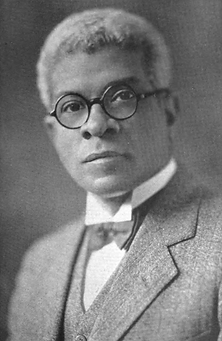
Charles Clinton Spaulding
August 1, 1874 - August 1, 1952
Charles Spaulding led as President of the North Carolina Mutual Life Insurance Company. At the time, this was the largest black-owned insurance company in the United States. His success in Durham, North Carolina led to the city being known as the "capital of black middle class."

John H. Johnson
January 19, 1918 - August 8, 2005
In 1942, John H. Johnson founded Johnson Publishing Company. In addition to Johnson's commercial ventures in magazine and book publishing, he owned Supreme Beauty Products and Fashion Fair Cosmetics, the largest black-owned cosmetics company in the world, a true entrepreneur.

Reginald F. Lewis
December 7, 1942 - January 19, 1993
After graduating Harvard Law School, Reginald Lewis founded the TLC Group L.P., a venture capital firm, in 1983. In 1987 he bought Beatrice International Foods for $985 million. In that same year, the company reported a revenue of $1.8 billion, making it the first black-owned company to have more than $1 billion annual sales.
Upcoming Black Entrepreneurs
Wondering who is leading the space right now? Here are some of the most influential African American entrepreneurs of our time. Their passion, excellence, and dedication continue to improve the entrepreneurial spirit of the United States daily.

March 31, 1984 - Present
Kyle Flanigan
Kyle Flanigan is the co-founder of US Specialty Formulations, LLC, is one of the very few Black owners of a biotech company. His innovation within the vaccine space has revolutionized immunotherapies and manufacturing.

Arian Simone
March 31, 1984 - Present
Arian is the co-founder and CEO of the Fearless Fund, which funds ventures as a fund 'built by women of colour for women of colour'. Their mission is to bridge the gap in Venture Capital accessing to funding for women of colour founders.

DeMaurice Smith
February 3, 1964 - Present
In 2020, DeMaurice Smith led NFL players to ratification of a new 10-year CBA amidst a national shutdown for the sports industry. His deal created the highest share of revenue for players in NFL history, increased the pensions of current and former players, and added more than $1.5 billion to players’ salaries.
