


“Be at war with your vices, at peace with your neighbors, and let every new year find you a better man.”
― Benjamin Franklin
Ventures & Visionaries
Issue #4
How Benjamin Franklin Invented the Subscription Model:


By Jack Ghannam

Benjamin Franklin has long been one of the most documented of our founding fathers. His intellectual capability, retention of knowledge, and revolutionary creations have been matched by few in history. Benjamin Franklin is known for a plethora of different reasons; being a patriot during the revolution, a distinguished abolitionist, inventor of the bifocal glasses, being our first Postmaster General. However, few know of his calculated entrepreneurial ventures. In particular, Benjamin Franklin’s love of knowledge led him to create a brand-new business model, one that is still used 300 years later, the subscription plan.
Fascinated with establishing centers of power in the new world, Franklin wanted to gather as much information as possible. His love for literature combined with his desire to spread knowledge among colonists led him to create the first subscription-based library. Franklin named his venture the Library Company of Philadelphia and opened doors to visitors in November of 1731. At this time the country hadn’t even existed yet, colonists were still under British rule, and for better context, George Washington wasn’t even alive yet.
The Library Company of Philadelphia’s first location charged an annual fee for use of literature at the library. At this time, the rarity, and thus the cost of books, were more than an average citizen could afford, at times many would have to pool money together to purchase a book. The subscription model allowed for one person to pay a blanket annual fee, allowing them access to whichever books they please, no matter how expensive. As long as the books are returned in a timely manner, there would be no additional charges to the subscriber. This concept took off, and with the success of his subscription model, Franklin implemented the subscription model into a newspaper. Benjamin Franklin’s subscription-based newspaper was called the Pennsylvania Gazette, known for its comedic features, literature sections, and intellectual commentary on political and social issues. The newspaper was fully funded through a subscription model, covering all distribution, printing, and sales costs.
Today, the subscription model is the one of the superior cashflow models in the 21st century digital space. This speaks to the truly incredible intellect, innovative desire, and revolutionary mindset of our founding fathers and their hopes for a united state within the new world.
Solve Your Customer’s Problems:
Part of the Library Company of Philadelphia’s success was the fact that it solved a huge problem, the cost of knowledge. Books were a luxury in 1731 and cost much more than any single-family household could afford. Many had to pool money together to purchase a book. This led many to believe that books were out of their price range and thus unattainable in most cases. Franklin solved this problem; he was able to charge customers a yearly fee which covered a seemingly unlimited supply of books and other forms of literature.
Never Stop Innovating:
After he found success within the Library Company of Philadelphia, Franklin moved to newspapers. He would also revolutionize the newspaper industry via a subscription model. Franklin never stopped innovating, whether it was inventions or business ventures.
Don’t Be Afraid to Fail:
Benjamin Franklin was no stranger to failure. Throughout his years of inventing, writing, government work, and extensive travels, Franklin has failed hundreds of times. The distinction between Benjamin Franklin and any other inventor from the 1730s is that Franklin never feared failure. He kept pushing forward regardless of the challenges he faced. Franklin was one to encourage failure, he wanted to find issues and attend to them properly in the art perfecting his creations. As an entrepreneur you will fail dozens and dozens of times, all that matters is that your last failure isn’t your final failure.
Business Takeaways:
College Student Takeaways:
Pursue Your Passion:
Whatever you feel you are meant to be doing is likely what you are meant to be doing. It may not be as direct and upfront as it may appear, but you can always find a livelihood in your passions. Personally, I am a lover of jewelry, commodities, and customer service, so I founded a jewelry business. After owning my business for over 18 months, I can tell you that you will never regret pursuing your passion in life.
Challenges Should Be Encouraged:
As a student, your goal should be to challenge your academic limits. This doesn’t mean overwhelming yourself in work, it means diving into the subject you love, want to study, or feel passionate about. Challenging yourself through exploration of academia is exactly the way that Benjamin Franklin found success in life.
Slack: Revolutionizing Workplace Communication
By Vincent Fucetola
Slack has emerged as a beacon of innovation, transforming from a messaging app to the powerhouse in workplace communication that it is today. Founded in 2013 by Stewart Butterfield, Eric Costello, Eric Hinchman, and Cal Henderson, Slack Technologies set out to reimagine internal communication, ultimately reshaping the way in which teams and business units collaborate.


As Slack skyrocketed in popularity, it encountered a highly paradoxical problem - information overload and fragmented communication. The platform originally designed to simplify workplace interactions was inundating its users with messages, notifications, and multiple channels. The same tool intended to streamline communication was making it more complex. So how did Slack respond to the obstacle?
Recognizing a need for proactive solutions, the company embarked on a journey centered around its core organizing principle - channels. Slack built and implemented a new channel organization model which emphasized clarity and structure. Users were now able to categorize channels as “Channels” for ongoing work and “Messages” for conversations. Empowering users with robust channel management tools, Slack allowed admins to set clear naming conventions, archive channels that were no longer needed, and pin important information or files for easy access. Users gained control over their notifications as well. Whether it was specific keywords or direct mentions in a conversations, users were able to tailor their notification preferences. Slack also introduced the concept of “Do Not Disturb” hours, letting users designate specific times when notifications would not appear, while the work-life balance discussion was simultaneously gaining traction.
Slack and its founders’ commitment to addressing the challenges of information overload and fragmented communication paid off. The platform evolved into a streamlines, organizes, and efficient communication hub for teams. Users reported not only increased productivity but also a reduction in stress and an overall improvement in collaboration.
Key Takeaways:
-
Listen, Adapt, and Enhance: Always be attuned to user feedback; adapt your product proactively to address evolving needs
-
Embrace Change and Pivot Strategically: Recognize when something isn’t working, and be willing to make well-thought-out pivots
-
User-Centric Innovation: Deeply understand user needs and challenges; build a product that genuinely solves people’s problems. Create an empathetic product
The Coconut Wars
Creating Vita Coco

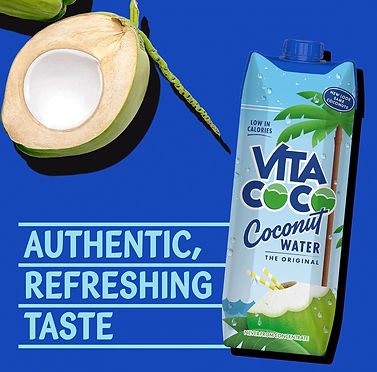
By Wyatt Tiller
Few stories capture the underdog spirit like Vita Coco in the bustling world of beverage giants. Founded in 2004 by Michael Kirban, Vita Coco dared to carve its niche in the nascent coconut water market. Now, the beverage company dominates nearly half the U.S. coconut water market and recently reached a market capitalization of $1.5 billion—a true testament to Kirban's relentless drive.
Sometimes referred to as the coconut wars, early on in the company's history, they were faced head-on with a significant challenger, Coca-Cola. In 2009, the global giant acquired a stake in Zico, Vita Coco's direct competitor, threatening to crush the young company with their vast resources. This could be a story of a readily accepted defeat, but it's not. Kirban, audacious and brimming with entrepreneurial spirit, chose to fight. He saw Coca-Cola's entry into the market not as a threat but a fuel injection of motivation. His mantra? "Bring me some fierce competition, and challenge me to beat it."
Kirban recognized that his competitor gained significantly from Coca-Cola's distribution network. The other side of the coin was Zico getting lost within the corporation's large umbrella of brands. Something founder Kirban was always aware of was safeguarding Vita Coco's equity. In 2010, to compete with Coca-Cola, he secured a distribution deal with Keurig Dr. Pepper, America's third-largest beverage group. This was a strategic move that placed Vita Coco on shelves nationwide.
Kirban's resourcefulness also shone when he landed a deal with Madonna and Matthew McConaughey, among other figures. They were partners who believed in the brand, organically integrating it into their lives and public personas. These celebrity endorsements secured investments and propelled Vita Coco into the spotlight. This unexpected partnership proved that strategic alliances can be game-changers. We can learn many admirable lessons through Vita Coco's growth and strategy. Kirban's philosophy was simple: thrive under pressure. He sees competition not as a barrier but as a motivator. This relentless pursuit of growth is the cornerstone of Vita Coco's success. Additionally, their unwavering belief in a vision, ability to turn threats into fuel, and steadfast dedication to building a brand that resonated with consumers helped the company excel.
So, is Vita Coco a good investment opportunity? Analysts only consider Vita Coco a "Moderate Buy" currently. It's not a first-choice recommendation, but indeed not a bad one. After all, the company beat its underdog status and made a $1.6 billion brand, a story worth celebrating.
Key Takeaways from Vita Coco:
Embrace competition: Use it as fuel to drive innovation and growth.
Think strategically: Seek unexpected partnerships to amplify your reach.
Believe in your vision: Never let doubt or setbacks dim your fire.
Founder’s Journal with Alex Lieberman:
8 Non-Obvious Traits of Great Leaders

Alex Lieberman is the cofounder and executive producer of Morning Brew and the host of the Founder’s Journal podcast. In this episode, he discusses the 8 traits that he believes made the managers and leaders he’s worked with special:
1. Self-awareness and Openness to Admit Fault
-
The best leaders understand their ‘circle of competence’ and the boundaries of this circle.
-
Employees are more likely to communicate constructive feedback if they know their manager is self-aware.
-
A “lack of self-awareness is self-sabotaging and prevents a person from experiencing compounding career growth.”
-
2. Decisive in the Face of Uncertainty
-
90% of your choices will not be black and white; learn how to thrive in the gray.
3. Information Hoarders and Signal Finders
-
Educated bets are not guesses, they are calculated decisions based on the data known so far.
-
The best leaders are the best listeners, with a keen ability to sift through the noise and identify what matters.
4. Balance Operational Excellence with Compassion
-
Leaders can not think of everything in terms of efficiency.
-
It can create a well-oiled business machine but in order to retain employees, they must feel empowered and supported.
-
Efficiency/effectiveness equals emotion/compassion.
-
5. Marry Pattern-Matching with Intuition and Gut Instincts
-
People who have a lot of experience actively look for patterns to inform their decision making.
-
This is great to solve reoccurring problems and create efficiency.
-
The experience can be blinding. Leaders must be careful not to draw patterns that do not exist or are no longer relevant.
-
6. Common Sense Implies An Extremely High IQ
-
Intelligence and performance are not always strongly correlated.
-
Certainly, as base level of knowledge is require in most cases but the majority of critical thinking comes from logic and common sense.
-
7. Exceptional Explainers
-
To be a great explainer, you must be great at understanding.
-
Leaders know their industry, job function, and business processes at a conceptual and fundamental level.
-
-
Great leaders don’t speak in jargon, they speak in truth that make sense to the layman.
8. No Task is Beneath the Best Leaders
-
There is a difference between delegation and laziness.
-
Good leaders delegate when they are not qualified for a task or when they think it’s a great growth opportunity for an employee.
-
They won’t hesitate to step into any task, regardless of their job description.
-
Smart Passive Income by Pat Flynn: First to Act
By Vincent Fucetola
Pat Flynn founded SPI as a personal blog back in 2008 and has always been a trailblazer in the entrepreneurial space, focusing on honest, tested advice.
“Everything's already been done!”
That's one of the most common excuses we come up with to stop us from starting a business. We tell ourselves all the good ideas are exhausted and that there's nothing new we can do. But is that really true? “In this episode, I want to help you shift your mindset around what it takes to build a brand online and help you discover promising niche markets. The truth is that opportunities are always there — you just have to get out of your own way to spot them!”
Embrace Emerging Markets: Recognize that opportunities are abundant, especially in emerging markets. Don't assume that all ideas have been exhausted; there's always something new to explore and share.
Take Action: Being the first to act in a particular niche doesn't guarantee ownership, but it offers a unique opportunity. Claim your space, demonstrate expertise, and take ownership of what you're passionate about.
Learning from Experience: Pat Flynn's experience with the LEED exam, an architecture exam where he was the first person to start posting notes, illustrates the power of being a pioneer. Even if you're not the absolute first, being the first to claim and demonstrate your commitment can set you apart.
Diversification and Exploration: Pat shares his experience with a new trading card game, Disney Lorcana, emphasizing the importance of diversification and exploring new interests. Entrepreneurs should be open to trying new things.
Authenticity and Imperfection: Creators don't need to be perfect or claim expertise. Sharing the learning journey, admitting mistakes, and engaging with the audience authentically can be more valuable than claiming to be an expert. Collaboration and healthy discussions among creators contribute to overall success.
Transformative Stories: Whether you succeed or face challenges, sharing your story is crucial. Transformative stories, detailing what happened before, during, and after a venture, provide valuable insights and inspiration for others. Every experience is a learning opportunity; don’t let past failures contribute to future successes.
No Need for Perfect Credentials: Entrepreneurial success doesn't require a laundry list of credentials. Being a leader in your space involves sharing what you're learning, what you're passionate about, and your journey along the way.
Continuous Learning: The entrepreneurial journey is a continuous learning process. Constantly seek opportunities to improve, learn, and adapt. Matt Wolfe's example in the AI space, he decided he wanted to become the AI guy and talk all things AI, amassing hundreds of thousands of subscribers, illustrates how exploring new technologies can lead to significant success.
Overcoming Self-limitations: Finally, recognize that business opportunities are abundant, and self-limiting beliefs can be the only hindrance. Be open to opportunities, avoid getting in your own way, and embrace the journey of entrepreneurship with enthusiasm.
Blueland: An End to Single-use Plastic Packaging
What happens when the thing that was supposed to last forever, only lasts for a finite amount of time? What happens when the one thing you wanted to dispose of ends up lasting for much longer than you initially expected? These doubts are especially true when it comes to the current management of plastic waste disposal, and with significantly increasing levels of waste accumulation, it is absolutely essential to come up with reusable solutions for this dilemma. Sarah Paiji Yoo asked these questions to herself relentlessly, and managed to obtain a potential answer to the challenges of plastic waste disposal.
After taking notice of the fact that buying, keeping, storing, and reusing cleaning products created more waste than intended, she began to create alternatives, specifically by making reusable flasks that do not have to be thrown away after their use. With this thinking in mind, she created Blueland, which now currently creates products that utilize a reusable refilling system for water, and by inserting tablets, will create a chemical mix that makes hand soap, dishwashing soap, cleaners for multiple surfaces, and other variations. By doing so, customers only have to buy a bottle kit once for unlimited uses, since it only requires a mixture of cleaning & soap tablets with water. The tablets can then be used with the “forever” bottles to create mixtures such as foaming hand soap or dishwashing soap. By providing consumers with the opportunity to simplify their cleaning products while minimizing their financial input to these expenses, Blueland managed to secure investments and began to innovate even more, eventually creating more than 40 patents for their tablet solutions.
The Results
As of 2019, Blueland has managed to successfully diverge more than 1,924,880,000 plastic bottles originally intended for single-use purposes from areas that accumulate the majority of the earth’s plastic waste disposal, such as landfills and oceans. Furthermore, their increased prioritization in cutting out waste has helped them save over 2,696,424 pounds of CO2, while also managing to save over 10,807,946 square feet of packaging. With their creative approaches to solving strategic issues revolving waste disposal, Blueland became a B Corp Certified business entity, while also holding accreditation through USDA BioPreferred. Finally, both Sarah Paiji Yoo and the company’s lead chemist, Syed Naqvi, competed in the 11th season of the acclaimed show Shark Tank, and managed to gain an investment from Kevin O’Leary of $270,000 for 3%, while also receiving a royalty of $0.50 for each product sold until the initial investment was satisfied. Interestingly enough, the finalized initial investment was created thanks to Sarah, who pitched it in the first place. As of 2023, Blueland was featured as a 2023 finalist in the EY Entrepreneur of the Year, New York.


INDUSTRY DASHBOARD
$55.5 Million Grant Announced for SMBs in New York City:
Governor Kathy Hocul announced a $55.5 million extension to the Small Business Revolving Fund. This extension would be dispursed via "microloans" to small businesses, under-banked communities, and those with financial issues in New York City.
Washington Spirit Owner Acquires London Women’s Football Club:
Owner of the Washington Spirit US soccer team, Michele Kang, has acquired the London City Lionesses Football Club. Kang strategically plans to own several clubs within women's soccer. The terms of the acquisiton were not announced.
BoxGroup Ends $425 Million Round of Funding to Support Early Growth:
BoxGroups, based in New York and San Francisco, quietly closed on $425 million in capital commitments into a pre-seed and seed-stage fund. Funding will be used to support early stage development and growth. The new funds come two years after BoxGroup raised $255 million for its fifth early-stage fund and second opportunity fund.
Why do Entrepreneurs Start Their Businesses?

